Monday, 29 October 2007

The March of the Penguin


I'm currently enjoying a short interlude after sending off the final proof of the new book - which now looks as if it will be out next month. I've a variety of things to talk about, but before I turn to more important matters of international significance, a little comment on my own small pond of Japanese literature.

My editor in Tokyo sent me a couple of weeks back a photocopy of the introductions by Jay Rubin and Murakami Haruki to a new collection in Japanese of Akutagawa's short stories. This is a actually a Japanese version of a collection of English translations of Japanese short stories. Why would the Japanese reproduce a book from English translation when the stories exist in Japanese in the first place? Let me explain.
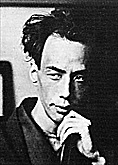
Penguin recently added the famous Taisho period short story writer Akutagawa Ryunosuke (1892-1927, pictured right) to their Classics series by publishing a book called Rashomon and Seventeen other Stories. Jay Rubin, former Harvard professor of Japanese and noted translator of the novels of Murakami Haruki and Natsume Soseki, read all Akutagawa's stories and picked out the ones he thought the best and which would be of greatest interest to the western reader. Then Murakami Haruki - Japan's renowned international best-selling author - was asked to provide an introduction.

So far, so good. In his preface to the book Jay Rubin notes his thanks to the 'dream team' of people who provided assistance with his translation labours and to Murakami for writing an introduction. The rationale for a Japanese edition of this book is that it provides a fascinating insight into which of Akutagawa's stories have the most international currency and also that the Japanese reader is likely to be interested in Murakami's introduction.

However reading Jay Rubin's preface to the Japanese edition, there is a curious account of how the collection came about in the first place. The former editor of Penguin Classics in London, we are told, 'by chance happened to come across an old translation of Akutagawa's stories and and immediately perceived the power of the works'. The editor had read Jay Rubin's translations of Murakami's novels, so he sent Jay Rubin a letter asking whether he might be interested in providing a new translation of Akutagawa's stories and whether they might be accompanied by an introduction from Murakami. The editor realised that a lot of time had passed since Akutagawa's death and that his works should be published as a 'classic', but he apparently wrote a letter full of passion for Akutagwawa's works, as if he had discovered a new talent who had suddenly emerged in the literary world.

Hmmm...It all sounds like a heart-warming story of the power of literature to move people across ages and cultures. Yet my interpretation of events is a little different.

Penguin purports to hold itself up to lofty standards, but actually it is not strictly literary criteria which determines what goes into Penguin Classics. For example, Penguin have for many years ignored the greatest modern writers of China and Japan because they have assessed that their works won't sell in the West. On the other hand, they have inserted into the 'classics' relatively minor works provided that they think they can turn a profit on them on the back of a 'celebrity tie-in'. Too often it seems that it is economics and publicity that determines what is included, rather than the series being representative of the best of world literature.

Let me tell you a little bit about my own experience. In 2000 I happened to write to Penguin suggesting that it was bizarre that the novels of Japan's most famous literary figure, Natsume Soseki, were not included in Penguin Classics. Nor indeed were the works of Lu Xun, China's greatest modern literary figure. I suggested that Soseki's novels be re-released with new introductions and said that this was particularly appropriate given that 2000 marked the centennial anniversary of Soseki's arrival in Britain and that the following year would see a year-long Japan festival in Britain. Why didn't Penguin take the opportunity of the anniversary and the festival to introduce Soseki's works to the British public?

The editor showed some interest and in a brief letter asked me where Penguin could get hold of the old translations of Soseki's novels. Then there was a long pause while they looked at the novels and then another brief letter was sent out declaring that Penguin would have to leave it for the moment as the schedule was currently 'too full'.

Shortly afterwards the same editor wrote the letter to Jay Rubin about Akutagawa. Jay says that it was because the editor happened 'by chance' to read the old translation of Akutagawa's works and that he 'immediately perceived the power of the works'. Well, call me a cynical old devil, but I rather suspect that it was actually because there was a famous film by Kurosawa called Rashomon which had won the Grand Prize at the Venice Film Festival and Penguin wanted to insert into the 'classics' a Japanese author who already had some currency in the West.

Now don't get me wrong. It's great that Akutagawa is in Penguin Classics - but it's surely strange that he should have got the nod before many other much more important Japanese and Chinese writers. I'm sure that Jay Rubin will have done excellent translations and that Murakami's name on the cover will help to get Akutagawa's works read by people who perhaps otherwise would never come into contact with them. (Though personally I don't think much of Murakami's abilities as a critic, but that's another matter). However my chief complaint is about the way a methodical commercialism is dressed up as 'passion for literature'.

Jay Rubin was busy on some other books so the Akutagawa book did not emerge until 2006. In the meantime, I wrote to Penguin again in 2003 about Soseki. By this time I had the manuscript of The Tower of London finished and I again suggested that Soseki should be in their classics series and so would they like to publish it? Again a few months of scrutiny ensued before the conclusion was reached that although there was no doubt about the quality of Soseki's works, the answer was still no. Since Soseki had no 'serious profile' in the West and because it was so long since he had died, it was 'too difficult' to now introduce him to the West. On this occasion it seems that 'perceiving the power of the works' was not enough.

I had to raise a smile however when I read Murakami's introduction to the collection of Akutagawa stories. Murakami (pictured right) lists the most popular 'national authors' of modern Japan and notes that there is no question that top of the list is Natsume Soseki. Furthermore he writes that his own personal preference - and this remember is in an introduction to a collection of Akutagawa's stories - is not for Akutagawa, but for Soseki and Tanizaki, with Akutagawa a distant third.

Lo and behold, Penguin suddenly changed their minds. Soseki would be put into their classics after all! From the whisperings that have reached my ears, a variety of new translations of Soseki novels are currently being prepared and are likely to emerge in the next few years.

Good to know then that the whole ethos of Penguin, nurtured from its first publication of E.V.Rieu's translation of The Odyssey, to open the eyes of readers around the world to the riches of literature has in no way been compromised by calculations of 'What's famous already? What will sell the best? Is there a film tie-in? Is there any celebrity who can write the introduction...?'

Tuesday, 25 September 2007

Lord Jim and a Tree


Regular readers of this blog will know that one of my hobby horses is talking about the world's great literature, particularly that of the non-European and non-English speaking world. Think of all those African and Asian writers we know so little about, I say. Haven't we heard enough about Dickens and Austen? Isn't it time for something new?

The only trouble with this is that there is a tendency to turn my back on English literature, of which for the most part I'm actually quite fond. Take Dickens, for example. A few months back, my girlfriend returned from the local library bearing two DVD box sets. One was Simon Schama's The Power of Art and the other was the BBC's recent production of Bleak House. As I look up to Schama as something of a role model, I was most keen to see the former, but Bleak House? Oh please, I said, I can't sit through that. I'd read Bleak House when I was at university in England and written essays about it, and I'd sat through the old BBC production with Denholm Eliot and Diana Rigg.


Bleak House is a fabulous book, one of the essential reads of English literature, but I'd already ticked that box, I couldn't possibly sit through the whole thing again. Yet I reluctantly watched the first episode and before I knew it I was completely hooked. This is the BBC at their absolute best - the marvellous performances turned in by the cream of the British acting profession (Charles Dance in particular is outstanding as Tulkinghorn), the superb screenplay and directing - all make it compulsive viewing. In the end, I watched the last six episodes back to back and was so filled with long-forgotten Dickens enthusiasm that I wanted to go back and re-read Bleak House. Instead I have vowed to read Little Dorrit in the near future, one of those (probably) essential classics that I have never got round to.

I had a similar wave of English literature longing/ nostalgia earlier today at my house in Japan when I read an interesting review by Cedric Watts in the Financial Times of a new book on Joseph Conrad. Apparently the author of this new book remarks that Conrad is not quite a 'great' novelist. I must admit to being something of a Conrad fan myself, having read in my early twenties all of his novels. Conrad's work is certainly something of a mixed bag. The late stuff like Chance is pure pap, and while I have a fondness for Victory I certainly wouldn't claim it to be a great novel. There's something to the idea that Conrad's work never recovered its intellectual intensity after Conrad's nervous breakdown incurred while writing Nostromo. Even the political stuff like Under Western Eyes and The Secret Agent don't quite hit the spot for me. And yet when Conrad was at the top of his game - in Heart of Darkness and Nostromo - it really is as good as it gets in terms of literature.

I flew back to Japan on Sunday and, under a little pressure from my editor in Tokyo, spent the entire flight working on the final proofs for my new book. I arrived a little boggle-eyed and made my way to my house in Nishinomiya and having done a bit of last-minute fact checking in the library of books I keep in Japan I finally conked out at 7pm. I then woke again at nearly midnight, and carried on working on the proofs until morning, when I finally got the proof back in the post to Tokyo. Completely shattered, I went to bed again at 1pm.


While all this was going on however something very disturbing was happening in the close proximity. My house overlooks a centuries-old tree, kept in the garden of the neighbouring large house. It is one of the very few natural wonders in the sea of suburban concrete that stretches for miles around, and one of the main reasons why I chose to live in this particular house. I can look out my windows and see nothing but greenery and, best of all, the tree is protected by Hyogo Prefecture.

Yet yesterday, I noticed that part of one of the tree's branches was lying in the neighbouring garden. I assumed it had perhaps been blown off in a recent typhoon. But then this morning, to my horror, a squadron of 'tree surgeons' arrived with a heavy vehicle and automatised extension ladders and began setting to work systematically cutting off section by section the lower parts of the tree. The older couple who own the large house next door had obviously taken it into their heads to drastically reduce the size of the tree.

It was a sickening sight, like watching a gang of mindless henchmen at work at some profoundly evil act. It wasn't just pruning, it was literally cutting it back in places towards its stump, as if it was some kind of giant bonsai. It is one of the few truly beautiful things for miles around, that has taken decades to reach its present expanse, and yet here it was having its limbs casually amputated.

I felt truly flustered by this whole business. How could this be happening? Wasn't there a preservation order from the prefecture on the tree? Had the owners got permission to do so? I felt that I should ring up the town hall and try and find out or go out and talk to the owners. But I was dead-tired with jet-lag and under pressure to finish the proof-reading and besides, this wasn't even my own country and I'd only been back a day. So I just tried to put the tree out of my mind, get on with my work and go to bed.

But perhaps due to reading about Conrad earlier in the day, when I woke up I started thinking about Lord Jim. It's one of Conrad's great insights that personality is revealed through action, that it is how we act at moments of sudden crisis that reveal what type of person we are. In the case of Lord Jim, he feels responsible for the deaths of a boatload of Muslim pilgrims, and is haunted by his own sense of failure at the crucial moment and desperately seeks to redeem himself.

We all I think potter about thinking that if we were faced with a crisis then we would act in the right way. We marvel for example that people in the 1930's sat back and watched, or merely put their heads in the sand while the Nazis perpetrated their horrors. We wouldn't do that, would we?

And yet, here I am, having faced my own little moment of unexpected crisis and discovering that I have completely failed the test. I sat back and did nothing. Now I am living next door to a somewhat mutilated tree. Like Lord Jim, I looked for my moment of redemption and waited to see if the 'tree surgeons' came back today. 'I might be in a foreign land, but if they do, this time they will have a fight on their hands!', I vowed. But today all is quiet. The 'pruning' of the tree is presumably over. I feel quite sorry for the poor old tree and even more ashamed of my lack of resolution, pointless as it may have been. I look up at the remaining branches and, to paraphrase Flaubert, mumble 'Lord Jim? C'est moi'.

http://www.ft.com/cms/s/0/1672cb44-665a-11dc-9fbb-0000779fd2ac.html

Tuesday, 11 September 2007

Losing God in Stockholm


Well hello, blogsters. Yes, I know it’s been a while. How have you been keeping? I’ve been meaning to write for the longest time, but with one thing and another…

It’s always fatal of course to pronounce – as I did in June – that I was looking forward to getting some writing done. No sooner had I written up my Argentine notebooks than the first draft of my new book in Japanese (Natsume Soseki: Superstar of World Literature) arrived from Tokyo. Now I had in mind that this time – unlike my previous book excursions – the whole process would be rather easy. After all I had written the book in English and it was being translated into Japanese so there would be no excruciating ponderings of Japanese syntax. But how wrong I was! It was of course incumbent upon me to check the veracity of the translation and to generally answer editing queries, but gosh, what a long and drawn-out process it has been. As the weeks of summer have rolled on, the proposed date of publication has gently rolled back, and still there is more fact-checking and fine tuning to be done. I can as ever only be enormously grateful to my editor and translator for their ceaseless efforts to make this long-delayed book something special.

Meanwhile I was also busy on a variety of other fronts. I gave a couple of talks, one in Japan to group mainly consisting of professional translators, and one at Manchester Art Gallery, to a group who were an eclectic mixture of people with Japan interests plus a variety of friends. I was quite worried on both occasions that no one would actually show up, but the first event attracted about thirty people and the second event about fifty, pretty much filling the lecture theatre, so both may be said to have gone well. I’m starting to get on a roll with these talks, supplementing my ramblings with power point presentations and amusing images which my girlfriend supplies. I’ve been invited to give a couple more in the autumn so I’m beginning to feel like a seasoned performer with a list of tour dates.

Anyway, as well as embroiling myself in the usual editing hell, giving the odd talk and embarking on a building project on my house in England, I have also made a few excursions. For five nights I stayed on a wonderful Croatian island called Sipan. It being August, the weather was a little too hot, but the island really was paradisaical – what I imagine the Greek islands were like back in the 1960’s before all the concrete arrived. On Sipan, there is just one hotel by the port and a genuine village atmosphere and nothing else to do all day but potter by sea through the olive groves or sit in the shade and read.


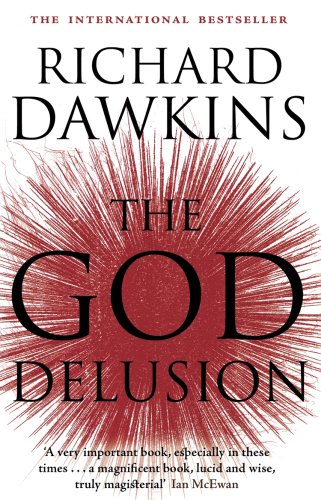
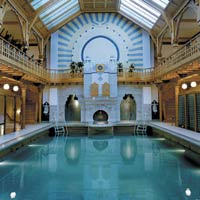
For the past ten days however, I have been in Sweden – somewhere I have long wanted to come and am writing this from the poolside of the Sturebadet spa in Stockholm, having just enjoyed a full Swedish massage. My reading material in Sweden has not been what you might expect. I should have really perused the plays of Strindberg (to my shame I have never read any of them, nor could I be bothered to visit inside his house, though I walked past it). Instead, about a year after everyone else, I have been ravenously reading Richard Dawkins’ The God Delusion.

What a marvellous book this is. I find it bizarre that it has taken me so long to get round to reading anything by Dawkins, but I think what initially put me off reading The God Delusion was that I already didn’t believe in God so it seemed like ‘What was the point? I don’t need convincing, I’m convinced already.’ Indeed, I inwardly groaned when I heard of staunch, committed and confirmed atheists reading it. It was too soft a target, I thought.

The important thing about The God Delusion however is that Dawkins not only convincingly points out all the reasons why a belief in God is irrational, but also that he then goes on to highlight all the ways in which religion has a pernicious influence. He targets the unquestioning respect which is afforded to religious faith and the absurd way in which religious leaders (surely the most deluded of the deluded) are wheeled out to pontificate on the problems of society as if they have a particular (god-given?) right to do so.

I am 95% in agreement with everything Dawkins writes and heartily recommend the book to everyone, but I must say there are a couple of areas where Dawkins and I part company. For one thing, although I admire the whole scientific enterprise and find lots of fascination in the latest scientific discoveries and theories, I’m not convinced that science is somehow going to give us ultimate enlightenment about the universe. It seems to me that while science is incredibly valuable in changing our perception of the world, it has a tendency to keep on raising as many questions as it answers. (Which is of course a good thing).

Some people seem to think that the gap between scientific understanding and ultimate enlightenment is where God comes in. Dawkins rightly points out that this is a nonsense. However what I don’t agree with is that science itself is going to bridge this gap. I’m all for getting rid of God and religion, but that doesn’t mean that science should attempt to take their place. It would be smarter – and a lot more realistic in my opinion – to realise that ultimate enlightenment is just not going to happen. And frankly we don’t need it anyway.

Dawkins starts off The God Delusion by quoting Douglas Adams who asks whether it isn’t enough to wonder at the beauty of a garden without believing that there are fairies at the bottom of it. But I would respond that we don’t need to ‘wonder’ at all. Frankly I don’t go into my garden and ‘wonder’; nor do I believe there are fairies at the bottom of it.


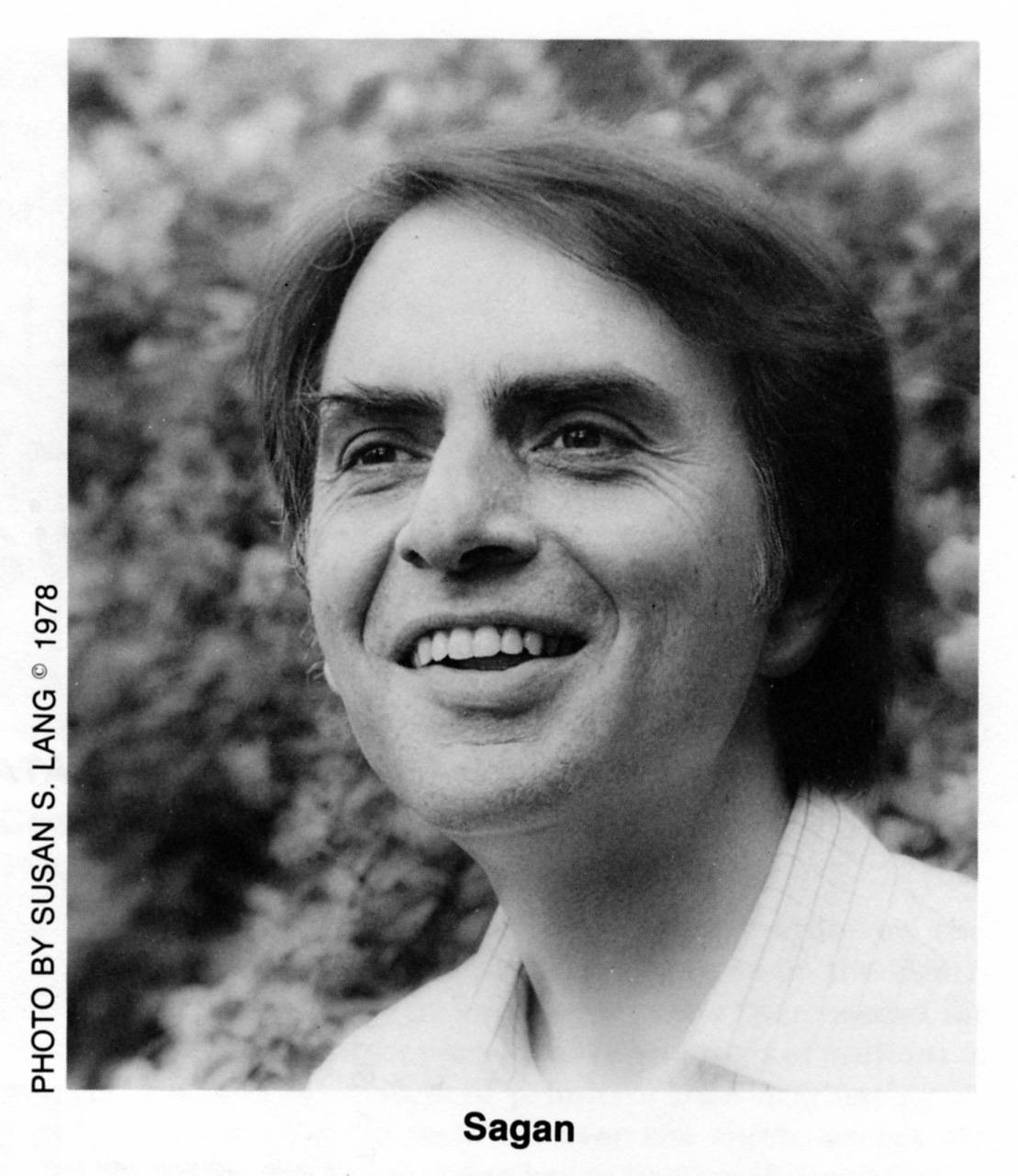
It’s curious in the ‘science versus religion’ debate that science has the tendency to come over all religious itself. We should ‘wonder’ at the miracle of evolution and all the billions and billions of stars in the sky. How wondrous is the cosmos that we live in! How precious our human consciousness within that cosmos! Carl Sagan – the archbishop of ‘wondrous’ science – wrote at the beginning of Cosmos how thrilled he was in the vastness of space and the countless aeons to share a lifetime with so-and-so. But it’s all such terrible schmaltz. Can’t we dump God and religion in the dustbin where they belong without science feeling it has to get all doe-eyed, ‘wondrous’ and full of religiosity in its place?

That’s where I slightly disagree with Dawkins – that somehow science is a replacement for religion, and that science and religion are the only games in town. You can, I think, have freed yourself from the evils of God and religion without giving yourself over totally to ‘science’ and ‘rationalism’ (important and valuable though they are).

For me, there will always be a place in my heart for godless irrationality, for holding two thoughts and two conflicting instincts at the same time. I’m with Nietzsche. God is dead. But science is not the new God. There is no new God. And thank heaven for that.

Thursday, 24 May 2007

In a (Virtual) Caribbean


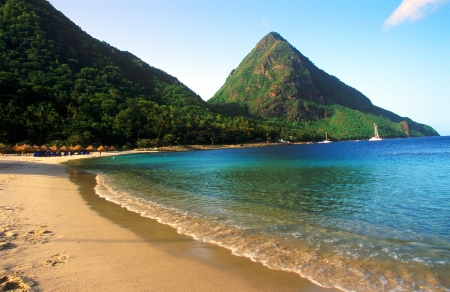
So, after a couple of weeks in England, I have moved on to Japan. Do not be confused by the above image however, which is not the concrete of downtown Osaka, but rather a beach in St. Lucia in the Caribbean, and the significance of which I will explain in a moment.

But first, Japan. Oh, my poor dear house in Japan - since last year I have only spent five weeks in it. But there it is, all pristine and perfect and waiting for the master's return. The great camphor tree in front of it is a blaze of greenery and I hope over the coming weeks I will take inspiration from it and keep pushing the pen and get some of my current projects finished. It is of course quite, quite wonderful to be back.

I have to say that when I returned to England from Argentina, things ground to a halt on the Cortazar front. I want to keep going with Hopscotch however if only to complete the Cortazar Dictionary I have been compiling. Here's a few of the words I've had to look up:

eleatic; excentrate; didascalic; grackle; astrakhan; caporal; cadastral; fastigiums; trismegistic

Is it just me or are some of these a tad obscure? I'm afraid Cortazar has dropped onto my reserve list of great writers and if his form doesn't improve soon, he can expect to be transferred.

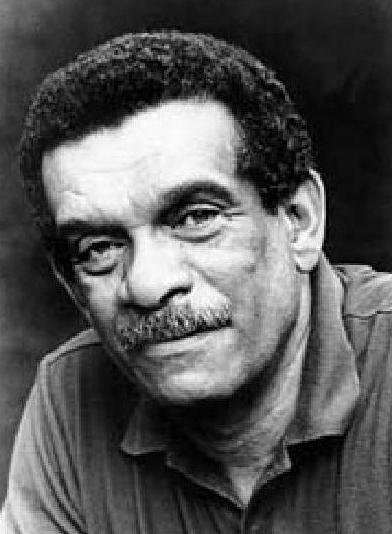
Bored with Julio, I made a mental leap to the Caribbean and have been scouting out Derek Walcott as a possible replacement and have been reading Omeros, set on the island of St. Lucia. Now Omeros does have its moments, but it's not exactly an easy read either - in fact I've only got a vague idea of what Derek is talking about most of the time.

In 1993, a year after Derek Walcott won the Nobel Prize for Literature, I spotted an advert for some evening classes in his poetry offered at a university. When I showed up for the first class however, I was told the course had been cancelled. It turned out that I was the only person who had signed up for it. Ah, there's nothing like a Nobel prize to galvanize mass public interest...


So it's really been a long time coming for me to get round to reading Derek Walcott's poetry. What I most enjoy about it is the evocation of the Caribbean island of St. Lucia, its history, people and patois. I've never been to the Caribbean and until opening Omeros, had no idea where St. Lucia was. So as an introduction to another part of the globe previously unknown to me, it's been excellent.

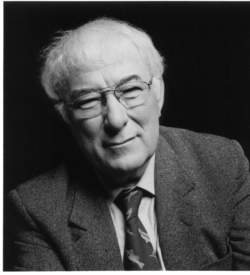
It's just a shame that the poetry itself is so hard going. Does poetry have to be like this? I keep reminding myself that the first time I read Seamus Heaney's poetry I also found it fairly impenetrable. But eventually I developed a great fondness for his work - in fact for many years I used to say that he was the only living writer in the English language I truly admired. (These days the numbers have doubled, but I'll talk about the other one another time).

When I was trying to promote my book about Soseki in London, I wrote to Seamus Heaney and attempted to persuade him to write something on Soseki. I put in some predictable blurb about how much I admired his work and how wonderful it would be if he could write something about Japan's greatest author. I think I was particularly angling for him to write something about Soseki and his Irish tutor William Craig (though as Craig was an Ulster protestant and Heaney is Catholic and nationalist, he was probably not the most enticing subject for Heaney's sympathies).

At the time, I wrote to various people I wanted to get interested in the subject and predictably several of them - Clive James, Roy Hattersley and a slew of miserable newspaper literary editors - never even bothered writing back. But from Heaney arrived a charming letter of thanks for the book I had sent him.

Later on, when we had the book launch for The Tower of London, I asked Peter Owen to send Heaney an invitation. Yet again, a card arrived wishing me the best, but explaining that he would be in St. Lucia that week.


Heaney must get inundated with these types of letters and invitations and so I appreciated his gracefulness. I did wonder however whether Heaney used the 'Sorry, but I'll be in St. Lucia next week' line as a sort of standard excuse in the way you or I might say, 'Sorry, but I'm watching Coronation Street that evening'. Then however I discovered a quote by Heaney on the inside jacket of Walcott's Omeros and realised that the poetry trail (a friendship with Walcott perhaps?) might explain the St. Lucia connection.

Incidentally, I also invited Seamus Heaney to the award ceremony for the Tower of London book at Columbia University in New York last year and heard at the dinner afterwards that he had yet again written in offering his apologies. At this point I began to fear that I was engaged in a kind of epistolary stalking of my hero and resolved that from now on I should probably content myself with admiring him from afar.

Anyway, for all you Soseki fans out there, a couple of pieces of news. I am informed by Kodansha that my new book (in Japanese) on Soseki is due out this autumn. I wrote this book in English and am already feeling indebted to the translator who has put such great efforts into it.

And if any of you would like to come and see me in the flesh - live and uncensored (to adopt Roy Chubby Brown parlance) - I will be doing a couple of gigs in the next couple of months. On June 16th I will be giving a talk in Nishinomiya, Japan, at a special event co-organized by Japan SWET and Kobe College. For details about this, please look at the events page.

And for those of you who can't make it to Japan, a similar event will be taking place in England in July, though the date has yet to be finalized. I'll keep you posted.

Saturday, 5 May 2007

Adios, Argentina


All good things must come to an end and so, with heavy heart, I must bade farewell to glorious Argentina. Adios y gracias.

But first, a few more adventures.

One thing I hadn't quite prepared for on the long drive back across the pampa was the flies. At first it was just a few flecks splattered on the windscreen. When I pulled into a petrol station 300km into the journey, a gawky kid hanging around with a dog asked me if I wanted the windscreen cleaned.

'Nah', I thought. 'Nothing I can't sort out myself.'

About 100km further on, I was having trouble seeing through the window. It was completely covered in splats. First I used up all my windscreen wash, then I had to stop the car and manually wipe off the sludge using my drinking water and tissues. As it got darker and my headlights went on, I found I was driving through a ferocious storm of greenfly, hitting the car like hail. Unable to see and groping my way in the dark and the glare of the headlights of oncoming lorries, I had to abandon driving and pull into a garage. The petrol station had vast swarms of flies swirling everywhere - more flies than I have ever seen. The front of my car had turned green with squashed fly sludge - it looked like a lawnmower that had spent a hard day cutting grass.

In order to avoid the traffic chaos of Buenos Aires, my plan was to spend the last night in Lujan, the pilgrimage centre dedicated to the cult of the Virgin. It was however a depressing place, full of the usual mix of kitsch tittle-tattle and insufferable religious piety that you can find in Fatima, Lourdes and Knock. A couple of hours there was more than enough so I opted to throw caution to the wind (the Virgin of Lujan is after all the matron saint of safe journeys) and brave Buenos Aires for one last night. With a couple of aperitifs in San Telmo and supper in Las Canitas, it was the only way to properly see out my Argentine travels.

Here's a quick list of things to love and loathe about Argentina.

I liked:

The People - marvellous, charming, unaffected people. It's going to be very hard to support England in any future England-Argentina internationals.

The Wine - Malbec of course, but Cabsavs and Pinot Noirs are glorious too.

The Love of Literature - puts the British to shame.

Futbol - pure passion and love of life.

Oh, and the huge expanses, the tango, and yes, even Dulce de Leche.

A few things I didn't like:

Stray dogs everywhere; grafitti everywhere; and the Malvinas obsession.

And a few things on which the jury is still out:

Julio Cortazar (300 pages in and he's not exactly floating my boat, but obviously someone thinks he's great)

Mate (perhaps it needs more practise, 35 million Argentines can't be wrong)

There's a wonderful English language bookshop in San Telmo called Walrus Books, a charming place with great books and mellow melodies. On my final morning I considered buying two hefty tomes, The Golden Bough and An Argentine Reader. I keep promising myself that I will keep my bibliomania in check and my suitcase already groaned under the weight of books. So I left the shop and paced around San Telmo, mulling my purchase.

I had recently bought in England The Cairo Trilogy and Lloyd George's enormous war memoirs in two volumes, plus a slew of other titles, and when was I going to get time to read them exactly? An inner voice answered that I had once bought in Winnipeg a 800-page History of Ukraine and hadn't I read it when I was bedridden for a few weeks? I found a part of myself secretly looking forward as a consolation to future illness that I will have time to read some of the books I keep buying.

So the conclusion was inevitable. I went back and bought the books. Oh well, at least I'll be able to inscribe my second-hand copy of The Golden Bough with the magical words 'Bought in Buenos Aires' inside.

Saturday, 28 April 2007

The Road to Santiago


Oh, boys and girls, where have you been? I've been having such adventures in Argentina.

In Buenos Aires, everyone advised me not to hire a car. Given the way the portenos drive, they said, it was an accident waiting to happen. Somewhat nervously, I ignored the good advice and set off to the wilds of the pampa with no road map or Spanish dictionary, though for obscure reasons several out-of-date Japanese newspapers and a book in Japanese on Borges. On my first day, after various wrong turnings and Spanish-English non-conversations on directions with tollgate wardens, I eventually got on the right highway and found my way to San Antonio del Areco, a famous gaucho town.

Delighted to have safely reached my destination, I pulled into an estancia in the dark, went over a very narrow bridge and put the tyre onto a small side wall. Crunch! For a moment I thought I'd wrecked the whole car. It was too dark to inspect the damage so I trundled bumpily along to a cheap hotel imagining the horrors that awaited. The tyre was indeed truly massacred - it looked as if it had been butchered with a knife and then hit with a large hammer. The next day I had it changed.


I spent the next night on an estancia having done the usual tourist palaver of horse riding on the pampa. The other guests were a group of Poles on an Argentine excursion heading for a science conference in Rio, which made for interesting company. Their tour leader had laid on three musicians and four dancers to come out from town and entertain them. We were however visited that night by a spectacular storm. I was suddenly summoned from my room by one of the servants and asked to drive the car through lashing rain off the estancia and down a 4 mile dirt track back onto the paved road. The estate workers correctly surmised that the dirt road was about to be turned into an impassable mud quagmire. I swerved along as it turned into bog in front of my eyes, frogs hopping all over it. I was driven back in a 4 by 4 and then towards the end of dinner, amidst the thunder and lightning, the power went out and we were in the dark. I could hardly believe that the musicians and dancers would show up to entertain the Poles in these conditions, but to my amazement they did. We sang and drank by candlelight in a swirl of Tango melodies and Polish toasts.

The next day, leaving the Poles behind, I set off again and at one point got completely lost on the pampa and drove for an hour without knowing where I was going, eventually navigating by the position of the sun in the sky. When I reached a petrol station, I couldn´t communicate with the attendant, apart from to work out that he didn't have any maps. The roads were terrible, full of potholes several feet wide.

Uncannily, the old tune Have You Ever Seen The Rain? is the one that I have heard played constantly on Argentine radio as I have driven along. It´s almost a kind of Argentinian anthem (though they do seem to have a great fondness for Tina Turner as well). The week before I had taken a boat over to Uruguay and spent the night in the town of Colonia before taking the bus to Montevideo. However the heavens opened there too and I was caught in flash floods. Soaked to the skin, I retreated to the indoor market down by the harbour area and discovered that by mid-afternoon the bars were already alive with singing and drinking and the most friendly people - it really had the feel of the west of Ireland.

I must say that I like the Uruguayans and the Argentines. I've met nothing but charming and pleasant people here the whole time. There are some verbal tics they have which quite amuse me. I don't know if it's the same in Spain, but here they all say 'Perfecto'. This seems to mean 'Sure', 'Got you', 'Understood'. However when they try and speak English they always directly translate this. So I find I'm having conversations where I ring the Hotel Reception and say,

'I'm sorry but I'll be checking out a day early as I've decided to go to Uruguay.'

'Perfect.'

'And while I'm on, can I also tell you that the shower isn't working?'

'Perfect.'

It almost sounds as if they are laying on the irony, but they say it with a straight face, entirely sincere.

I've now arrived in Mendoza Province, the centre of the wine country and so - greatly against my will, of course - must force myself on a tour of the local bodegas to imbibe a few choice Malbec. While I was in Buenos Aires, I was reading and writing about Borges; since then it was all Paz and I've enormously enjoyed The Labyrinth of Solitude, a stimulating book, which while mainly being about Mexico has illuminated a lot of interesting aspects of Latin American history.

Now however I'm back to Cortazar's Hopscotch. Here's my favourite sentence so far, one which surely would have made even D. H. Lawrence blush:

He turned her into Pasiphae, he bent her over and used her as if she were a young boy, he knew her and he demanded the slavishness of the most abject whore, he magnified her into a constellation, he held her in his arms smelling of blood, he made her drink the semen which ran into her mouth like a challenge to the Logos, he sucked out the shadow from her womb and her rump and raised himself to her face to anoint her with herself in that ultimate work of knowledge which only a man can give to a woman, he wore her out with skin and hair and drool and moans, he drained her completely of her magnificent strength, he threw her against a pillow and sheet and felt her crying with happiness against his face which another cigarette was returning to the night from the room and from the hotel.

Well, I don't know who 'Pasiphae' is, but it sounds like they had a pretty good shag.

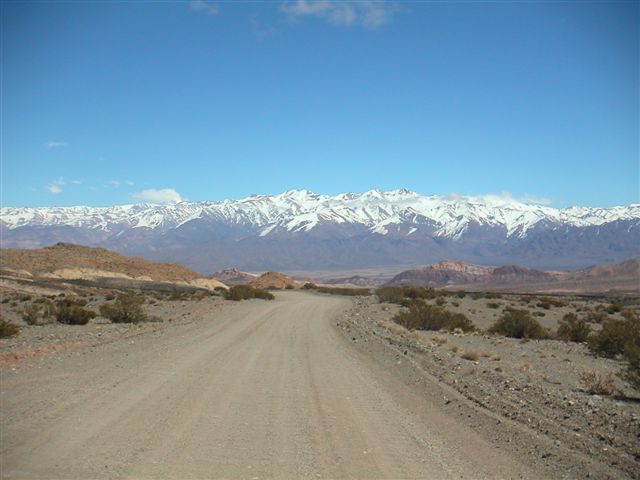
You may have worked out by now that I haven't done too much planning for this trip - in fact I didn't open a guidebook until I arrived. I've never known where my ultimate destination was going to be. I toyed with the idea of Patagonia, but that's really a 3-week trip on its own. I also thought of Iguazu in the far north, but that's more an add-on to a future Brazilian excursion. No, there was only one sensible destination - Santiago, waiting for me there on the other side of the Andes. So that was meant to be the final leg of the tour, but two days ago, after driving deep into the Andes and finally reaching the border at dusk, I was dismayed to discover that I couldn´t cross with my rental car.

It may all be for the best. Santiago is after all 24 hours of driving from Buenos Aires so I decided to unwind with some whitewater rafting here in San Rafael instead. Now all that faces me is a 1000km drive back across the pampa...

Wednesday, 11 April 2007

In The House of Tango


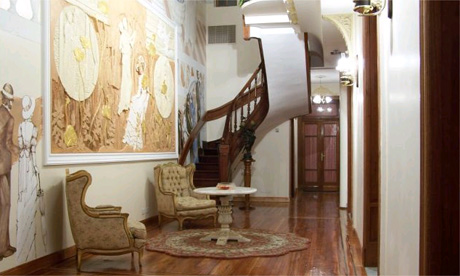
Well, ten days ago, I finally took the plunge and booked my flight to Buenos Aires as the start of an extended trip to Argentina. I arrived on Good Friday in surprisingly sprightly form after the long flight and checked into my hotel in the bohemian San Telmo district. The hotel is a charming period mansion - towering ceilings, beautiful cornices, murals, and sweeping staircases - and has a very strong tango theme. In fact there is a ballroom downstairs offering tango lessons so I really must go down and insert the rose between my teeth at some point. But for the first five days I've been doing nothing but record-breaking marathon walks across the city.

I've long wanted to come to Argentina, but there is also something of a mission behind the trip (honest). I'm currently writing a series about some of the world's great writers and I'm trying to make it truly global in scope. After my long years in Japan, and frequent jaunts around East Asia, writing about the literature of Japan, China and other countries of that region isn't too difficult. Europe and North America are also obviously no problem. Things get a bit more tricky with the Middle East and Africa - I have to do more homework on the history of various countries - but then even when I'm writing about an Islamic writer, perhaps it's thanks to my Catholic upbringing but I can usually quickly log on to the whole Jewish-Christian-Muslim background. No, the part of the world whose literature is most alien to me is that of Central and South America. It doesn't help of course that I don't read any Spanish, but it's probably more to do with unfamiliarity with the cultures of Latin America. So I'm having a bit of a push on that at the moment, and suitably loaded up with works by Borges and Paz, have finally made landfall in Argentina.

With my usual aplomb, I managed to arrive exactly at the time of the 25th anniversary of the Falklands War. I never quite realised what a source of intense nationalist sentiment the issue of Las Malvinas is to Argentina. There is a permanent shrine to the Argentinian soldiers who died in the conflict in one of the main squares, plaques to the war dead in churches, graffiti of Las Malvinas everywhere, and now on top of this there are two public exhibitions of photographs from the war in public spaces. I've always felt fairly bored/uninterested in the whole Falklands/Malvinas dispute, but in Argentina it is presented in such a one-sided and inflammatory way that it becomes irksome.

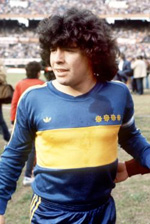
On my second day I was taking a tour of the Bombonera Stadium, home of Boca Juniors, Maradona's old club. There were about 100 people taking the tour and the guide announced that he would be conducting it in Spanish and English. Was there anyone who did not speak Spanish, he asked. I was standing at the front of the group and immediately lifted my hand. To my horror I turned round and saw that I was the only person who had done so. To the rich amusement of the rest of the group, the tour guide had to repeat everything in English just for my benefit.

When we were all seated in the stadium, the guide asked where everyone was from. I tried to avoid it, but it was inevitable he was going to ask the only non-Spanish speaker.

'And where are you from, sir?'

I could feel 99 pairs of Argentine eyes bearing down upon me. Las Malvinas! Las Malvinas son Argentinas! Would I ever get out of the stadium alive?

'Ireland', I lied, making an internal nod to my ancestors. Ah, my innate cowardice to the rescue again!

But anyway, back to literary matters. I must have browsed at least twenty bookshops since I have been here, including one extraordinary shop on Avenue Santa Fe that is an old theatre converted into a bookshop - the stage is a coffee shop and people sit reading books in the boxes. This is in stark contrast to my home town where I realised last week that there are now precisely two - count them, two - bookshops in the whole city centre area. Worse, both are outlets of the same Evil Empire (Waterstones) and neither of them is any good. I called in to find some plays by the Nobel prize-winner Wole Soyinka. Neither shop stocked a single play. The situation really is terrible. It's all Richard and Judy Book Club rubbish. Somebody should really write an exciting, provocative series introducing the fascination of world literature to the English-speaking world...

Choosing the writers to put in my project has in itself been an evolving process. I'm basically interested in writers who are 'world-class' but who for some reason or other are unknown to Richard and Judy and much of the rest of the English-speaking world. It's a bit like putting together a literary first eleven. Some names virtually wrote themselves on the team sheet - Soseki, Lu Xun, Mahfouz - but the rest of the places were all up for grabs. Along the way, I've had some really interesting discoveries - the Norwegian writer Tarjei Vesaas for example. And I still have various African literature to get through (if I can ever get hold of the books, that is). But just for the moment, I'm concentrating on Latin America.

I rather think my pick of the Argentinians will be Julio Cortazar, who rather fits the bill of being incredibly well-known in his own country, but still not exactly world-famous. It all depends however on whether I feel sufficiently enthusiastic about him when I have finished reading Hopscotch...


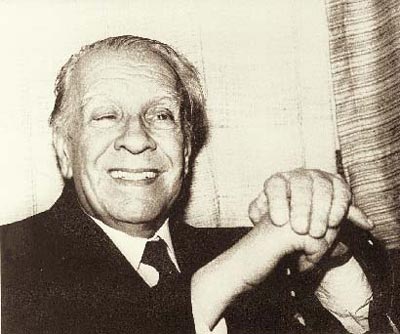
In the meantime however I am just soaking myself in the literature of Borges. Incidentally, the other night I was strolling around the Palermo district and stood looking in an estate agency window. The next thing I knew an elderly gentleman started talking to me in Spanish. I told him I couldn't understand and he immediately switched to English. For a moment I thought he was the owner of the shop, but I gradually realised he was just a passer-by. He was immaculately dressed in jacket and tie and polished shoes, and had an air of cultured, elegant refinement. He was the type of man who could just meet someone on the street, switch to his language and engage him in long conversation. Eventually he shuffled off to his home nearby and as I watched him depart, I began to think that Borges in old age was probably a man very like him. In fact, just for a moment, I almost felt as if I had been visited by Borges' ghost...