Thursday, 14 April 2011

Alas, My Beloved Tohoku


As is the way of these things, the world media circus seems to have now moved on from Japan despite the fact that the aftershocks, the accumulation of radiation, and the humanitarian relief issues remain. Perhaps time then to take stock of a few aspects of the now one-month-old disaster.

The first thing I wish to say is that my heart sears at the thought of it being the Tohoku (North-East) of all regions that had to suffer this.

I have travelled to every one of Japan's 47 prefectures, but I love the area of Tohoku more than any other. The first time I went to Japan, when I was 19, I had 11 weeks to explore the country and spent the first few weeks dashing about with a Japan Rail Pass in hand on trains from Tokyo to Kyoto and from Niigata to Sapporo. But somehow, there seemed something superficial about this trek from one urban centre to another. From the train windows I gazed hypnotically for hours at the rural landscapes outside. It occurred to me that this was was where Japan's greatest secrets were to be found and that I could never reach them while dashing through the country on Bullet Trains.

So, somewhere outside Morioka, right in the centre of the Tohoku region, I decided to get off the train and just start walking. I resolved that all I would do now for the next two months was walk and walk and walk. For friends who know me now as someone who, in Woody Allen-fashion, views the countryside as somewhere desirable to make a day trip but no more, they might be surprised to learn that in my 19th year, I spent an entire summer rambling the wilds of Tohoku, climbing all the highest peaks, exploring remote peninsulas, circumnavigating volcanic lakes. I stayed at the cheapest hostels and ryokan, lived off a diet of rice and raisin bread, lost an enormous amount of weight. My sole companions were books such as Shusaku Endo's Silence, histories of Japan and teach-yourself Kanji books.

There is nowhere quite like Tohoku. In subsequent years I hitchhiked around Shikoku, went on driving tours around Kyushu, travelled to remote islands in the Japan Sea, flew to Okinawa. But nowhere quite matched that first summer. Once, I had spent two days walking down the 'axe-head' of the Shimokita Peninsula at the very northern reach of Tohoku. It was stupendously beautiful and remote. I hardly met a soul on my two days on the road, singing loudly as I walked. My resting place was a little village in a cove, which I came upon late at night in search of the only minshuku (family home cum lodging house) in town. In those days it seemed as though you could always take chances on these kinds of things and something would turn up.

Tohoku was always a place that represented 'the other': a paradoxical place of adventure and yet safety, a place of turning-in-on-oneself and spiritual retreat. It was ever so. In the seventeenth century when Basho set out on his Narrow Road to the Deep North, he was of course Tohoku bound. In the twelfth century, it was Tohoku to which the legendary figures Yoshitsune and Benkei fled from strife in war-torn Kyoto. The narrow road north seemed to lead to the very heart of Japan itself. When, in the Second World War, it was feared that the library of Natsume Soseki, preserved in Tokyo, would be destroyed by air raids, his disciple Komiya Toyotaka brought the books to Sendai for safekeeping.

Tohoku was Japan's inner sanctum. And the reasons for this were steeped in both history and geography. Not only is Tohoku most rugged region, but it is also the area where the original occupants of Japan were gradually pushed back by continental invaders in the first millennium. There are pockets of Tohoku where shamanistic rituals survive and where Buddhism is still a foreign, imported faith. If you dig deep enough in Japan, Tohoku is what you come to.

We all have places of the mind that are our spiritual retreats. Sometimes we might seldom visit them, but nevertheless that does not dim their importance. Their significance is not so much as a physical, day-to-day locale, but rather as a symbolic place of mental retreat and homecoming, somewhere that we are all intending to come back to, somewhere where our ashes might be scattered.

For me, such a place is Tohoku, though it has been many years now since my foot has trod its turf. For the last twenty years I have always been dreaming of having just one summer like that of my 19th year in Tohoku, of walking the road again with nothing but a shoulder bag and map, of re-climbing those mountains, of walking once more those coastlines. Always though, there were too many work pressures, deadlines to meet, and young children to look after.

It is perhaps absurd to say so in the face of such tangible human misery, but the devastation in Tohoku affects me in a way slightly different to all the media hype. I feel as though the place of my most cherished memories, my mental retreat has come under attack.

Tohoku is assuredly part of Japan and a part of the Japanese economy. But it is also part of the world, with resonances across the globe not immediately apparent from any simple categorization. Selfishly, I will always believe it to be my Tohoku and it is for this reason, and a thousand others, that I wish it a speedy recovery.

Wednesday, 16 March 2011

Catastrophe in Japan

On Monday morning I took a call from the London Evening Standard asking me if I would like to pen a few words in reaction to the devastating earthquake and catastrophic tsunami. Beyond the obvious misery of human loss and the usual palaver about 'economic impact', my thoughts turned to how this terrible event will shape the future psyche of the Japanese nation:

http://www.thisislondon.co.uk/standard/article-23931834-yes-japan-will-recover-materially-but-what-of-the-national-psyche.do

There is of course a lot more to be said on this subject and tonight I expanded on it a little in an interview on the BBC's World News Today.

Longer musings on the disaster will follow shortly, but for the moment my heartfelt condolences to all those affected by the tragedy. My own memories of being caught in the devastation of Kobe in 1995 have been brought all too vividly back to mind.

Sunday, 6 March 2011

The Three Cornered World


Yesterday in the post arrived a couple of copies of the new edition of The Three Cornered World and very pretty it looks too. It's the fourth book from Peter Owen (apart from my own on Soseki in London) for which I've contributed a chunky introduction, and this one has the added bonus of an afterword by me analysing all the calligraphy for the entire series. (Is my analysis getting too Freudian? I describe the frontispiece calligraphy for Kokoro as 'surging spermatozoa (that) tail back into a receiving 'feminine' character'. Yikes, hope I'm not the only one seeing testosterone there.)

It really is a great honour to introduce a masterpiece like The Three Cornered World (TCW) to a new generation of readers. It's not just one of the great Japanese books, it's one of the supreme masterpieces of the twentieth century. And good to know I'm in good company thinking that. One of the most fascinating aspects of the story of TCW is the way it was beloved by Glenn Gould (1932-82), that fascinating, maverick, musical genius.

Gould came across TCW quite by accident. He never visited Japan; indeed due to his dislike of flying, after his retirement from concert playing in his early thirties, he never left North America. In 1967 he was taking a vacation in Nova Scotia from his home in Toronto, when he was approached in the club car of the train by a professor of chemistry called William Foley, a great admirer of Gould's work. The two men fell into conversation and it seems that Foley mentioned to Gould (pictured left) a
wonderful book he had just read called The Three Cornered World. When the time came to part, the world's most famous pianist presented Foley with his recording of Beethoven's Emperor concerto. Foley later returned the favour by sending Gould a copy of TCW. (There's a very nice equivalence here between a Beethoven musical masterpiece being exchanged for a Soseki literary masterpiece, a kind of Parnassian Swap Shop.)

It is pretty much impossible to overestimate the impact the book had on Gould. (Indeed two books by the Japanese critic Yokota Shoichiro are devoted purely to the subject of Gould and TCW). Not only did TCW become Gould's all-time favourite book, but he was obsessed with it for the last fifteen years of his life. As well as buying all Soseki's other books in translation, he ended up owning four copies of TCW (including, incredibly, two in Japanese); he read out the entire novel over the phone to his closest friend Jessie Greいg; he recorded a slightly condensed version of the first chapter for a nationwide Canadian radio show; and he compiled 37 pages of his own notes on the book. He was it seems preparing to write his own adaptation of the novel for a radio play that was to be called Shioda's Daughter before a cruel stroke brought his life to a premature end. Famously, when he died there were only two books at his bedside: The Bible and The Three Cornered World.

You can, amongst many other intriguing subjects related to this amazing novel, read more about the extraordinary story of this colllision between musical and literary geniuses in the new edition of The Three Cornered World.

A quick note too about Alan Turney, the translator of TCW. In one of my very first blogs, back in 2006, I mentioned my sadness about hearing of his death. The whole story of how, back in 1964, Turney, at age 26, only 6 years after starting to learn Japanese, managed to produce this inspired translation of a dauntingly difficult text, is thrilling. I never had the pleasure of meeting Turney, but he was one of those pioneers whose efforts and achievements - and whose subsequent lack of recognition - was something I always felt keenly.

The year before he died, Turney sent me a warm letter having read my book about Soseki in London. The new critical introduction is dedicated to his memory. It's very, very overdue, but I finally think that with this new edition this enduring masterpiece will now start to get the recognition it deserves. Mark my words: The Three Cornered World is about to be born anew.

Monday, 11 October 2010

Japan Day 2010 in Manchester

The Japan Society North West will be holding its Japan Day 2010 on Sunday October 17th in the Alexander Suite of the Midland Hotel, Manchester from 11am to 5pm. There will be 45 stalls offering information and products on every aspect of Japan from food and drink to Japanese textiles, gardens, bonsai, manga, koi fish, ukiyo-e prints, dolls etc etc. In addition there will be a stage with performances running throughout the day of taiko drumming, kendo, aikido, kimono fashion etc.

I will be manning the Japanese literature stall in the centre of the room as well as chewing the fat over favourite authors and current projects. Entry to the whole event is completely free of charge.

The last Japan Day in Manchester two years ago drew a huge crowd so it should be a bustling event this time as well. More information is here:

http://www.jsnw.org.uk/

Sunday, 25 April 2010

Discussing Endo on Open Book

You can hear me discussing that marvellous Japanese author Shusaku Endo with the author Caryl Philipps and Mariella Frostrup on the BBC Radio 4 programme Open Book.

http://www.bbc.co.uk/programmes/b00s1pdx#synopsis

Some of Endo's books have recently been released on audiobooks, but listening to Caryl Philipps' wonderfully rich, soothing and mellifluous tones made me think that Caryl should perhaps voice some audiobooks himself.

Incidentally I love Caryl's description of Endo's masterpiece Silence as 'K2', encouraging new readers to take it easy amongst the foothills before attempting this daunting summit.

We await with interest to see when Martin Scorcese's film of Silence - in planning now for many a year with quite a few Hollywood A-listers linked to it - will be completed. It will surely mark the start of a long overdue 'Endo-boom' when it is finally released.

Friday, 19 March 2010

Off With Their Heads


During January and February I was very busy having children. Or I should say I was attendant on the act of birth. (Every time I turn round these days another child has appeared. Where do they all come from? Someone really must explain it to me, but in the meantime I've had my hands full with my one-year-old son and two-month-old daughter.)

For two months I was too busy to read even a single newspaper, but kept receiving them by the bag-load. Whereupon, feeling exhausted and stressed, I proceeded to put bag after bag of newspapers into a large trunk in a room at home I quaintly call 'The Raj Room'. Finally at the end of February I had acquired a quite vast quantity of newspapers. Obsessive compulsion disorder demanded that I finally sit down and over the course of a few days catch up, in entirely random order, on nine weeks of news, features and seemingly endless supplements.

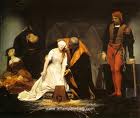
Buried deep in the newspaper mountain was an article on the new exhibition at the National Gallery. It's called 'Painting History: Delaroche and Lady Jane Grey' and runs until 23 May. The exhibition apparently offers a reappraisal of the painter Paul Delaroche (1797-1856), who had sunk into critical oblivion during the twentieth century, but whose painting The Execution of Lady Jane Grey has proved to be one of the most popular amongst all those at the National Gallery.

But, hang on a minute. The title story in the book I published in 2005, The Tower of London, has at its heart precisely this subject. 'The Tower of London'
is an eerie fantasy meditating on the nature of time and history, where a Japanese visitor to the Tower of London spies the ghost of Lady Jane Grey and the blood-splattered climax of the story is a re-enactment of Delaroche's picture. Not only that, but Soseki actually includes a re-enactment of another Delaroche painting The Princes in the Tower (pictured right) in the same story.

What a pity, I thought, that the organizers of this exhibition had no idea that Delaroche's paintings, and The Execution of Lady Jane Grey in particular, had gone on to inspire a classic work of Japanese literature. What a fascinating coda to the exhibition it would have made if there had been some reference to this. The exhibition apparently notes that Delaroche was influenced by theatre, yet in Soseki's literary rendition, it is almost as if the pictures have been returned to their theatrical setting as he refers to the 'stage of the imagination' and treats the re-enactment of the pictures as scenes of a play. Soseki was fascinated by the interaction of visual and literary arts and in his early work was striving to summon up 'word-paintings', with famous pictures like Delaroche's fused into the fabric of his literary works.

This seemed like too good an opportunity to miss and so I dashed off some emails to the National Gallery. If nothing else, I suggested, would it not be a good idea to pile up some copies of Soseki's Tower of London at the exhibition so visitors could find out for themselves what the intriguing worldwide influence of Delaroche's paintings have been?

Gratifyingly I did receive a nice email from the guest curator, expressing interest in Soseki's story but regretting that she was just about to depart to Italy for three weeks (ah, the life of the fine art critic). Yet following it came the inevitable email from the National Gallery shop explaining that if only they had known about the book they would of course have stocked it, but unfortunately now all the exhibition book budget had been spent and all the shelf space allocated...

While we are on the subject, can someone tell me why they don't sell Soseki's The Tower of London at the shop at the Tower of London (pictured right)? I mean Soseki is the most important Japanese writer of the modern age and his story 'The Tower of London' was one of his breakthrough works. There seems however only to be space for books on the history of the Tower of London or Tudor history or pop-up books for children. Trying to persuade the Tower of London shop that they might also have room for a world literary classic and you descend into a Kafkaesque world of bureaucratic jobsworthiness. My dear sir, to have a book sold at the Tower of London shop you must first submit an application to Her Majesty's Palaces, whereupon the book will be scrutinized for its worthiness, suitability and public appeal...and so on and so on.

Is it really that people don't want to know anything more than endless rehashes of Tudor History? Or are they are simply prevented from finding ways of expanding their knowledge of the world, of seeing the myriad ways in which cultures, and the visual and literary arts, interact? I can't help finding it sad that the only people who get to read the classics of Japanese literature are those on Japanese courses or those with a particular interest in Japan. And yet so many of the stories themselves, like 'The Tower of London', are patently universal in appeal and connect to a multitude of fascinating subjects which have nothing to do with Japan. The only problem is these literary classics are consistently excluded from all the places where you should be able to easily acquire them.

Sunday, 7 March 2010

Translating Chinese Couplets


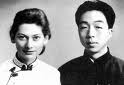
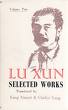
The death in November last year of Yang Xianyi, the 93-year-old veteran translator marked the end of an era in terms of the transmission of Chinese culture to the West. Lengthy obituaries hailed the achievements of this most prolific of translators, who together with his English wife Gladys (pictured above) produced over 60 books of translations of the Chinese classics, ranging from the 4-volume Selected Works of twentieth century novelist Lu Xun to the lyrical poem from the fourth century BC Li Sao and from the works of post-Mao writers to the vast eighteenth century novel The Dream of Red Mansions.

The lives of Yang Xianyi and Gladys Yang read like a film script and it is hard to think that any of the new generation of translators will live through such turbulent and extraordinary times. The grandson of a senior provincial governor and the son of a Bank of China official in the city of Tianjin, who amassed a fortune partly through dealings with warlords, Xianyi was at first educated in the Chinese classics and then sent to a British missionary school where most of the classes were in English. There he immersed himself in English literature, translating Milton into classical Chinese verse, before conceiving of the desire to learn Latin and Greek, which brought him in 1936 to Merton College, Oxford.

After two years he switched to studying French literature and finally English literature, taking tutorials with the poet Edmund Blunden. He was hardly a star pupil however, spending liberally and travelling extensively, and generally acquiring the reputation of a playboy. He did find time however to set up an anti-Japanese Chinese newspaper and, thanks to the Oxford China Society, fell in love with Gladys Tayler, the first undergraduate to study Chinese at Oxford. He finally emerged with a fourth-class degree, which he referred to as 'a rare beast'.

Gladys was the daughter of missionaries in China and had spent her early childhood in Beijing before being packed off to boarding school in England. Both of their families were horrified at the thought of their inter-racial union, but nevertheless they returned to China in 1940 and married in the wartime capital of Chongqing, then under the control of Chiang Kai-shek's nationalists. After the defeat of the Japanese they moved to Nanjing, working as English teachers and translators.

With the fall of the Nationalist regime in 1949, the couple were offered a means to escape to Taiwan, but elected to stay on in communist China and moved to Beijing where by 1952 they were working for the Foreign Languages Press, entrusted with the daunting task of translating the major works of Chinese literature into English as well as producing translations of many propaganda pieces. In his spare time Yang Xianyi also worked on translations, somewhat frowned upon by his communist overseers, of Western literary classics such as Homer's Odyssey, the works of Aristophanes, The Song of Roland and Bernard Shaw's Pygmalion into Chinese.


By the 1960's, the Yangs had already produced amongst many other translations, The Selected Works of Lu Xun, the Qing dynasty novel The Scholars and had commenced work on The Dream of Red Mansions. They had two daughters and a son and became mentors to a stream of westerners who came to Beijing to study or teach. But disaster struck when in 1968 they both fell victim to the turmoil of the Cultural Revolution (1966-76) and found themselves thrown into prison for four years. Gladys was kept in solitary confinement while Xianyi shared a grim cell with a mixture of criminals and political prisoners. Neither knew anything about the other's fate and Gladys' mother in England died not knowing what had happened to her daughter.

Finally released in 1972, the couple resumed their translation work, but further tragedy lay ahead. As part of the Cultural Revolution, their children were sent to work in factories or communes in distant provinces and their son Yang Ye began to suffer mental health problems, rejecting the Chinese around him and wishing only to associate with English people. After with difficulty obtaining a visa allowing him to go to the care of family members in London, he committed suicide there in 1979, a tragedy from which Gladys never fully recovered.

In the 1980's the Yangs' home became a salon in Beijing where Chinese and Western writers and intellectuals gathered to freely discuss ideas over copious amounts of gin and whisky. Gladys set about translating the works of a new generation of post-Mao writers and became interested in the Women's Movement, translating the works of Chinese women writers. For a time there was a relaxation of government control and a new openness and in 1985 Yang finally joined the Communist party. But immediately afterwards a reaction set in leading to the massacre of Tiannamen Square in 1989. Xianyi courageously spoke out against the atrocity, comparing China's leaders to fascists, worse even than the warlords of the past or the Japanese invaders.


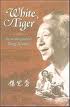
Gladys passed away aged 80 in 1999. The following year Xianyi published his autobiography White Tiger. He was awarded an honorary doctorate by the University of Hong Kong who praised him as a 'master translator'. On September 17 2009, shortly before his death, the Translators Association of China bestowed upon him their Lifetime Achievement in Translation Award with the words 'he is second to none among Chinese translators in terms of quantity, quality and influence'. After his death, John Gittings commented in The Guardian that 'tens of thousands of foreign students of Chinese, from then till today, have relied on their work' and the anonymous obituary writer of The Times agreed that 'they produced a steady stream of translations of very high quality'.

There's seems no doubt then from all the available evidence that the Yangs were extremely good eggs - their hearts were in the right place, they were incredibly diligent and productive, kind, open and unstuffy. In the face of constant political oppression, they were fearless and suffered a great deal in order to be able to devote their lives to the translation of Chinese literature and make accessible that vast continent of knowledge to readers in the West.


For all these reasons, you can't help admiring them. However there is a flip side, which somewhat awkwardly and reluctantly, I feel obliged to point out. The simple fact of the matter is that Chinese literature is still virtually unknown in the West and, apart from students of Chinese, hardly anyone would consider reading these scores of government-backed translations. The Dream of Red Mansions, for example, is one of the great books of world literature, yet how many people in the West have the slightest idea about its contents?

What is the reason for this? When Mao first met Xianyi and heard that he had translated the long poem Li Sao, he expressed scepticism that the poem could be translated, but Xianyi replied that 'I think everything can be translated'. Not everyone however was so convinced. David Hawkes, a friend of Xianyi's, who did his own translation of Li Sao (as well as his own version of Red Mansions) offered the opinion that the translation 'bears as much resemblance to the original as a chocolate Easter egg to an omelette', a remark which apparently amused Xianyi.

My own perspective on the Yangs is unfortunately very different to all the gushing praise of the obituary writers. One of my great literary heroes is Lu Xun, a bust of whom adorns the mantelpiece of my home. He is someone whose work I became familiar with ten years ago when I was PhD student in Japan. Lu Xun is every bit as well known and critically lionized in Japan (where he is known as 'Rojin') as he is in China and has been since his works were first translated into Japanese in the 1920's.


Fascinated both with Lu Xun's life story and his literary works, I made some years ago the pilgrimage to the Lu Xun House and the vast Lu Xun museum (pictured left) in Shanghai. Here I bought the 4-volume Selected Works of Lu Xun in English translation by the Yangs. But upon turning its pages, my heart sank at how leaden and uninspired these translations were. I struggled through volume one before abandoning completely the other three volumes. If this was what I had to go on, I could see nothing at all of interest about Lu Xun's writings, despite his being widely regarded as the greatest writer of modern China.

And yet I am sure that the writings of Lu Xun are some of the greatest of the twentieth century. But I can only say this with confidence because I have been able to read stories such as 'The True Story of Ah Q' and 'Diary of a Madman' in Japanese translation, sometimes comparing it with the Chinese original. Reading them in the Yangs' English translation was an entirely different, dispiriting experience, in which all the richness and savage wit of the original was completely lost.

At the time I had no idea who 'Yang Xianyi and Gladys Yang' were, but merely thought of them as a classic example of the perils of collaborative translations. As in some old-fashioned translations of the Japanese classics where a Japanese person did a first draft that was liberally rewritten by a Westerner who could not even read the original, I could only mistakenly imagine that this was the case here also and that 'Xianyi' had done a first draft into unintelligible English before it was tidied up into readable, if tedious prose by 'Gladys'. I marvelled that a pairing so lacking in talent could have the audacity to produce a full 4-volumes of translations by the great Lu Xun. Little did I know that this was just the tip of the iceberg as regards the enormous translation output of the Yangs.

And some years later when I was in Hong Kong and browsing in an English language bookshop, I thought of seeing if I could lay my hands on a translation of that greatest of Chinese novels, The Dream of Red Mansions, but discovered to my horror that there again were names 'Yang Xianyi and Gladys Yang'. I did not buy the book, but muttered to myself what induced these people to keep on churning out such translations.

Of course now, knowing the full history of the Yangs and everything they went through to produce these translations, I feel acutely embarrassed at my ungratefulness with regards to their heartfelt and herculean labours. But that does not change my strong suspicion that most of their translations were rapidly produced and of questionable quality. Yang Xianyi was I am sure an amiable, amusing and erudite man, and a robust believer in political freedom, but I suspect that there are good reasons both why he emerged from Oxford with a fourth-class degree and why so few people in the West read his translations.

To my mind the great Western discovery of the Chinese classics is a task that still lies ahead and that hopefully next time will be taken out of the hands of state controlled publishers in Beijing and entrusted instead to visionary publishers in the West and first rate academics and writers both with an appreciation for the complexities and subtleties of Chinese and a flair for the English language. Modern couples like Chinese novelist Ma Jian and his English translator wife Flora Drew might be better equipped to bridge the cultural and linguistic divide.

China cannot go on being the cultural elephant in the room, but is now a presence in the world that none of us can ignore. That journey of understanding has to start with the country's literature and its rendering into fresh translations that fully communicate the richness of ideas, colour and passion of the original masterpieces.